
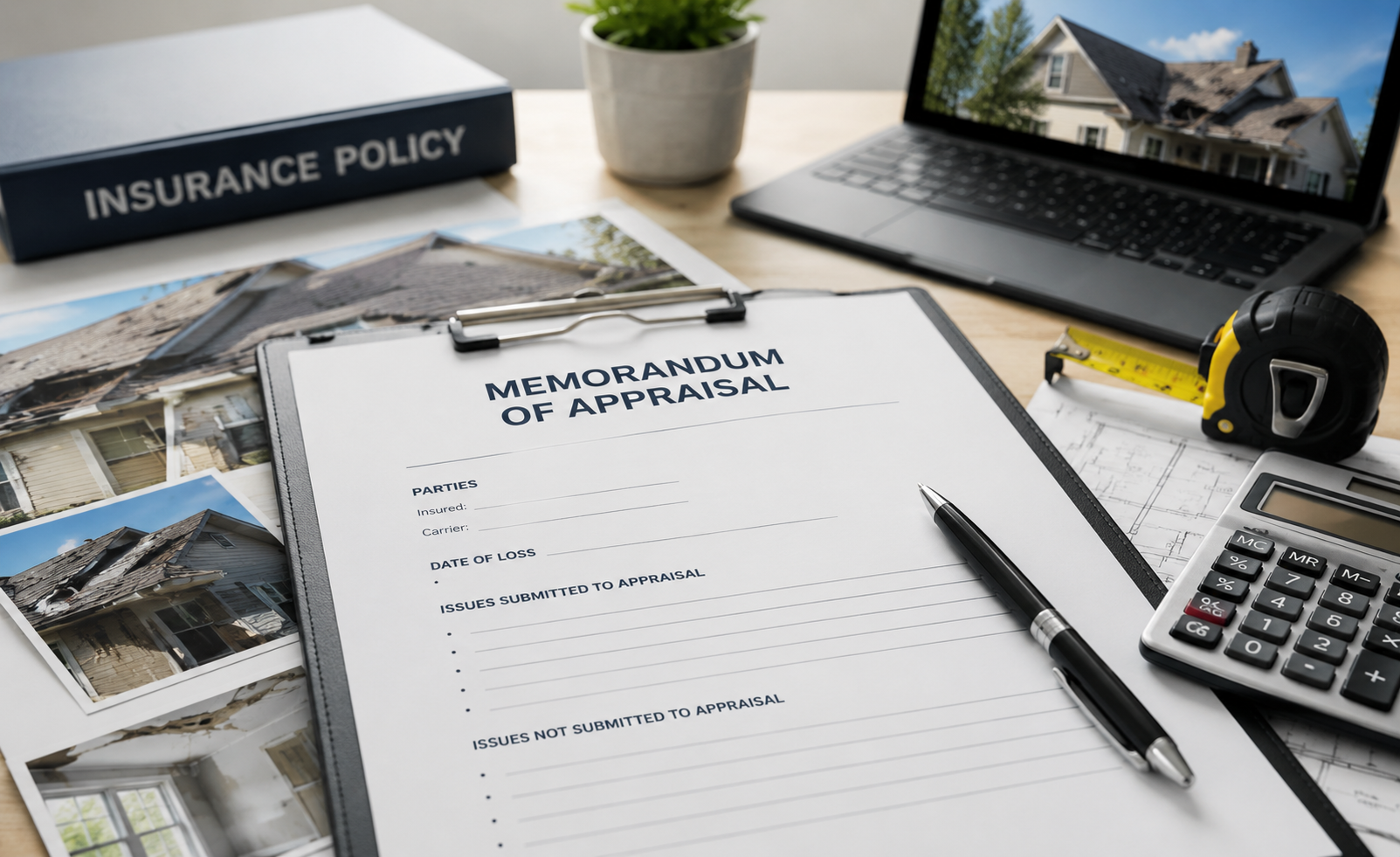
One of the most valuable documents in the appraisal process is the Memorandum of Appraisal.
A well-prepared Memorandum of Appraisal identifies the parties involved, the date of loss, and, most importantly, the issues being submitted to appraisal. Although not every appraisal begins with one, it can significantly reduce confusion by clearly defining the scope of the appraisal before inspections begin.
Just as importantly, the memorandum can identify issues that are not part of the appraisal. Coverage determinations, policy interpretation, prior damage, or other reserved issues may already have been addressed by the carrier or remain unresolved.
By identifying those items at the outset, the appraisers and umpire can focus on determining the amount of loss for the matters that are actually before the panel, rather than spending valuable time debating the scope of the assignment.
A clear Memorandum of Appraisal benefits everyone involved. It helps the insured and carrier understand what the panel has been asked to determine, provides direction to the appraisers, reduces unnecessary disputes during the appraisal process, and can help avoid delays or the need for supplemental proceedings.
When expectations are established from the beginning, the appraisal process is generally more efficient, and the resulting award is less likely to create questions after it is signed.
At Calibrated Insurance Services, we believe that clearly defining the scope of an appraisal benefits everyone involved.
A few minutes spent establishing that scope at the beginning of the process can save hours of questions, disagreements, and delays later. Sometimes the most valuable document in an appraisal isn’t the award—it’s the one that helps everyone reach it.
Property insurance appraisals are our specialty.
Our experienced appraisers conduct valuations independently and impartially, within the scope of the policy and the appraisal clause.
We emphasize:
- Accuracy – every valuation is evidence-based, scope-driven, and defensible.
- Professionalism – communication remains courteous, transparent, and appropriate to the appraisal forum.
- Efficiency – we keep the appraisal moving without compromising neutrality or quality.
Our process is designed to produce a fair, well-documented, and timely determination of the amount of loss.
We do not advocate outcomes for either party; we focus on clear methodology, complete documentation, and a result that stands on its own.
Related articles

March 28, 2026
Referring a disputed insurance claim to appraisal can be a smart and efficient way to resolve value disagreements—but only when done correctly. Over the years, we’ve seen several recurring missteps that can cost time, money, and even credibility in the process.

March 16, 2026
As an insurance appraiser, having the right tools at your disposal can significantly impact your efficiency, accuracy, and overall success in appraising insurance claims. Whether you're assessing property damage, valuing assets, or determining claim settlements, these five essential tools can streamline your workflow and enhance your appraisal process.
February 15, 2026
A business continuity plan is not merely a document but a lifeline—a strategic blueprint designed to ensure an organization's resilience and survival in the face of adversity. It's a proactive approach that goes beyond reacting to crises; it's about preparing, adapting, and thriving in turbulent times.